 And, other than that, Mrs. Lincoln, how did you enjoy the play.
Matthew Kalman in the Daily Mail tells us (and dozens are repeating this non-story):
Not only is the Turin Shroud probably a medieval fake but it is just one of an astonishing 40 so-called burial cloths of Jesus, according to an eminent church historian.
Antonio Lombatti said the false shrouds circulated in the Middle Ages, but most of them were later destroyed.
He said the Turin Shroud itself – showing an image of a bearded man and venerated for centuries as Christ’s burial cloth – appears to have originated in Turkey some 1,300 years after the Crucifixion.
The Turin Shroud was believed to have covered Jesus, but a leading Church historian says it is one of many produced over a thousand years after his death
Lombatti, of the Università Popolare in Parma, Italy, cited work by a 19th century French historian who had studied surviving medieval documents. ‘The Turin Shroud is only one of the many burial cloths which were circulating in the Christian world during the Middle Ages. There were at least 40,’ said Lombatti.
[ . . . ]
In a research paper to be published this month in the scholarly journal Studi Medievali, Lombatti says the shroud was most likely given to French knight Geoffroy de Charny as a memento from a crusade to Smyrna, Turkey, in 1346. The de Charny family are the first recorded owners of the shroud.
This is really old news. And it is a shameful example of the “many bad bean fallacy,” where upon finding some bad beans in a pot of beans we conclude that every bean must be bad. Where have we heard this before? Joe Nickell was referring to in Investigative Files, Volume 34.6, November/December 2010:
The proliferating pieces of the True Cross have been rivaled for outlandishness by many other bogus relics–such as over forty shrouds of Jesus . . .
An April 5, 1998 press release from CSICOP in Amherst, NY quotes Joe Nickell saying:
Historically, the Shroud of Turin is one of some forty reputed burial cloths of Jesus, although it is the only one to bear the apparent imprints and bloodstains of a crucified man.
Only one with apparent imprints: Must be a different 40.
Wait a minute. Maybe that is where the eighty came from. In Stephen Jones’ blog, he handles the question well:
>The shroud is a fake, just like the eighty or so others.
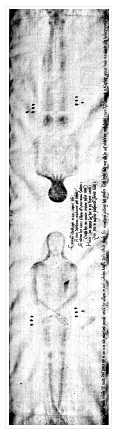
That there may be forty (not "eighty") copies of the Shroud original (like the 1516 Lier copy above), does not thereby make that original a "fake".
And as agnostic art historian de Wesselow points out, the Shroud is "nothing like any other medieval work of art:
Dubious Source, that Daily Mail paper: The Turin Shroud is a fake: Eminent historian claims it was one of 40 similar cloths which originated 1,300 years AFTER the crucifixion | Mail Online
That’s funny.